http://www.csmonitor.com/USA/Society/2012/0315/Three-in-10-young-adults-live-with-parents-highest-level-since-1950s
The rise in the boomerang phenomenon illustrates the effect the recession and the weak economy are having on young adults,” says Kim Parker, a senior researcher at Pew and the author of the study. “Young adults were hit particularly hard in the job market and are having to delay reaching some basic financial milestones of adulthood because of this.”
In 1980, some 11 percent of young adults lived in multigenerational households, suggesting that a strong economy helped youngsters gain independence more quickly. Today, some 29 percent of 25- to 34-year olds either never moved out of their parents’ home or say they returned home in recent years because of the economy, according to the Pew report. Among 18- to 24-year olds, that figure is even higher – 53 percent of young adults in that age group live at home.
------------------------
D - multigenerational homes are a reaction in Japan to very long mortgage payoff times for very expensive residential real estate.
Saturday, March 17, 2012

Saturday, March 10, 2012
quebec student protest tuition hikes.


http://www.theglobeandmail.com/news/national/injured-student-fights-to-save-eye-after-quebec-tuition-clash/article2363168/
A day earlier, seven people were arrested during a pair of Montreal protests — the latest in a string of demonstrations by students who believe Quebec's rock-bottom tuition rates are a basic right.
------------
D - oh, those whiny maggots! ... NOT.
Rephrased - "by students who believe that political activism ensures societally beneficial reasonable cost tuition is worth advcocating for."
Notice the difference?
Quebec has low tutions because the students don't passively accept tuition hikes.
There is a lesson here.
D - do you suppose the author would have felt sufficiently emboldened to snipe at retirees protesting about old age benefits? I don't think so.
http://www.newswire.ca/en/story/842221/tuition-fees-increase-in-most-provinces-students-call-for-federal-leadership-on-education
youth giving up on finding work


http://www.theglobeandmail.com/report-on-business/economy/jobs/young-leading-exodus-from-lacklustre-canadian-labour-market/article2364070/
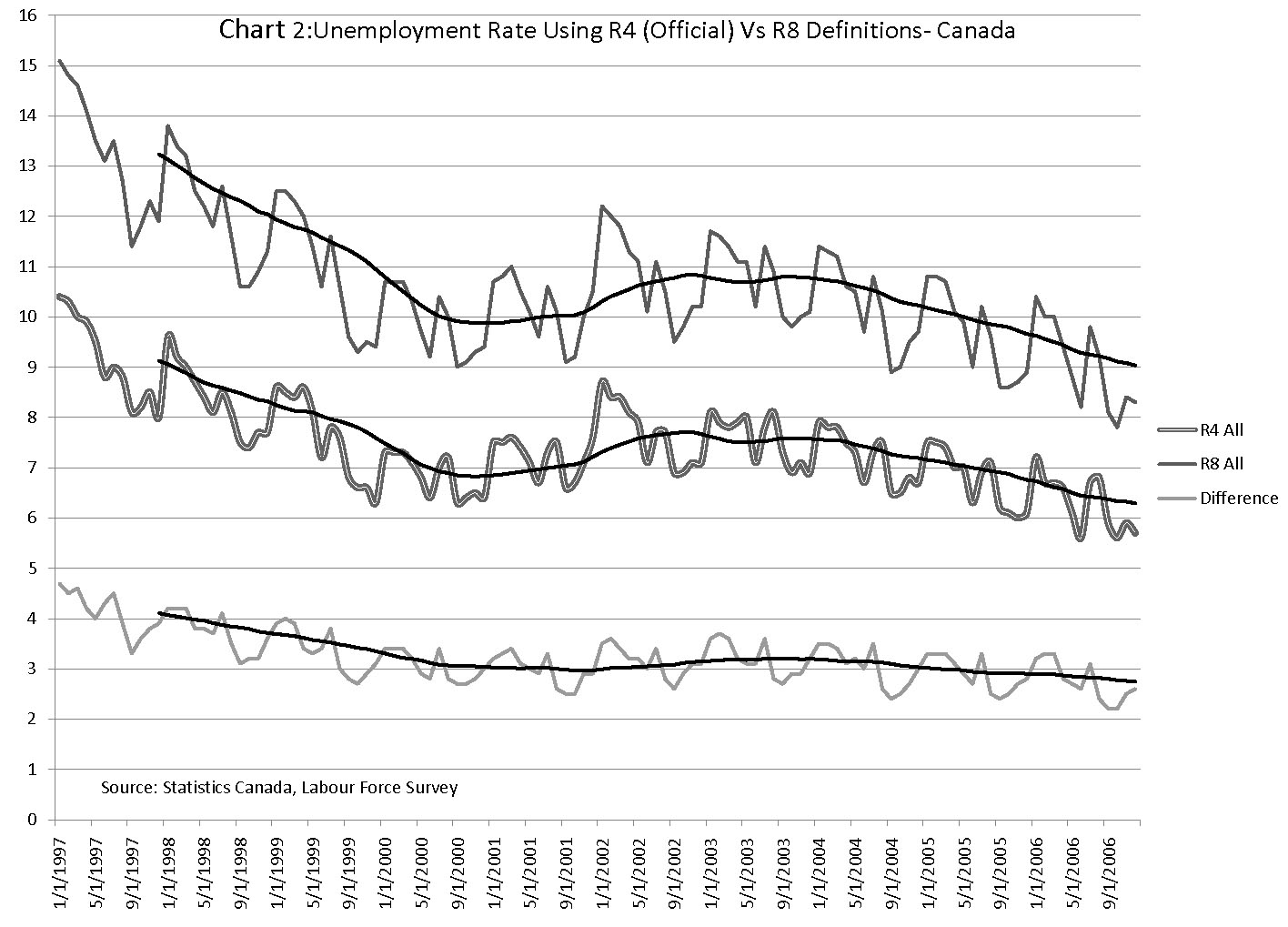
The country’s jobless rate fell two notches to 7.4 per cent in February, but that was because fewer people were looking for work, rather than any pickup in the labour market, Statistics Canada said Friday. The country’s labour participation rate has ebbed to its lowest level in a decade.
Young people are leading the exodus. Their jobless rate hit 14.7 per cent last month – its highest level since October, 2010 – amid five straight months of employment declines. Poor prospects mean almost 200,000 of them have left the labour force since the recession began. The youth participation rate has tumbled to a 16-month low and is approaching 1995 levels. “This is a really significant issue,” said Francis Fong, an economist at Toronto-Dominion Bank who wrote a paper this week predicting the youth jobs market will remain tough for years to come...
This generation of younger workers are our future labour force … and they are facing some pretty unique pressures that other generations didn’t have to go through,” Mr. Fong said.
He said the economic consequences will include muted consumer spending among the young, heavy debt loads and delayed home buying.
Among the university crowd, the mood is one of a deep sense of frustration...
Statscan’s broadest measure of unemployment is the so-called R8, which includes discouraged workers and those working part-time who would rather have a full-time job; that measure stood at is 11.4 per cent in February, a slight improvement from 11.7 per cent a year earlier.
----------------
D - it can be tough to convince older folks that the times, they really are different. That growing up is tough today.
For more, check out suicide rates intergenerationally compared for youth...
3 genX western premiers
-
http://www.theglobeandmail.com/news/politics/western-canadas-gen-x-premiers-cast-as-the-new-powerful/article2365307/
“The three of us sat together and we had a chat about this,” recalled Ms. Clark. “It’s a rare confluence of events. The population is moving to the West, the economy is almost solely based in our three Western provinces, we are all from free-enterprise parties, we are already working with this [free-trade] base. And we all happen to have been born in the same year. We are all Gen Xers.”
Demography is not destiny, but Ms. Clark may be on to something. Each of the three Western premiers, all born in 1965, say they have been shaped by the classic Generation X experience: growing up in the shadow of the baby boomers, who gobbled up jobs leaving little behind but scraps. While boomers outperformed their parents, Gen Xers were told to lower their expectations and recognize the constraints that can exist on government.
These three Gen X premiers are conservative in their views, regardless of party label. All three believe in free-enterprise politics. All three juggled work with raising children. Two of them attended the University of Saskatchewan at the same time, members of the campus Progressive Conservative club. They all completed their education amid a troubled economy and an era of state largesse, which would ultimately shape their approach to managing government...
Defining Generation X
Canadian economist and demographer David Foot defines Generation X as those born between 1960 and 1966. The generation faced a harsh recession as they emerged from high school, and scant career prospects.
-------------
D - but if Boomers vote them in, not like GenX elected officials can deviate from the Boomer 'script' much.
http://www.theglobeandmail.com/news/politics/western-canadas-gen-x-premiers-cast-as-the-new-powerful/article2365307/
“The three of us sat together and we had a chat about this,” recalled Ms. Clark. “It’s a rare confluence of events. The population is moving to the West, the economy is almost solely based in our three Western provinces, we are all from free-enterprise parties, we are already working with this [free-trade] base. And we all happen to have been born in the same year. We are all Gen Xers.”
Demography is not destiny, but Ms. Clark may be on to something. Each of the three Western premiers, all born in 1965, say they have been shaped by the classic Generation X experience: growing up in the shadow of the baby boomers, who gobbled up jobs leaving little behind but scraps. While boomers outperformed their parents, Gen Xers were told to lower their expectations and recognize the constraints that can exist on government.
These three Gen X premiers are conservative in their views, regardless of party label. All three believe in free-enterprise politics. All three juggled work with raising children. Two of them attended the University of Saskatchewan at the same time, members of the campus Progressive Conservative club. They all completed their education amid a troubled economy and an era of state largesse, which would ultimately shape their approach to managing government...
Defining Generation X
Canadian economist and demographer David Foot defines Generation X as those born between 1960 and 1966. The generation faced a harsh recession as they emerged from high school, and scant career prospects.
-------------
D - but if Boomers vote them in, not like GenX elected officials can deviate from the Boomer 'script' much.
Wednesday, March 7, 2012
Federal omnibus bill. to young offenders.
http://www.cbc.ca/news/politics/story/2012/03/06/f-bill-c10-objections.html
Harsher sentences for young offenders
Changes to the Youth Criminal Justice Act will impose tougher sentences for violent and repeat young offenders, make it easier to keep such offenders in custody prior to trial and expand the definition of what is considered a "violent offence" to include "creating a substantial likelihood of causing bodily harm" rather than just causing, attempting to cause or threatening to cause bodily harm.
The new legislation will also require the Crown to consider adult sentences for offenders convicted of "serious violent offences" and require judges to consider lifting the publication ban on names of offenders convicted of "violent offences" even when they have been given youth sentences.
Some of the concerns around these provisions raised by some of the professionals who work with young offenders include:
The publication of names of some young offenders will unjustly stigmatize them for life. Quebec has asked that provinces be allowed to opt out of this provision.
The changes shift the emphasis of the Act from rehabilitation to "protection of society," which critics say will put the focus on punishing young offenders rather than steering them away from a life of crime. Quebec, in particular, which prides itself on the success of the rehabilitative aspects of its youth justice system, has argued for stronger language prioritizing rehabilitation.
Stiffer, longer sentences will turn young offenders into hardened criminals and undermine any potential for rehabilitation.
As with other parts of the crime bill, critics says harsher sentencing rules and increased emphasis on incarceration will disproportionately affect aboriginal and black Canadians, who are already over-represented in the criminal justice system.
-----------
D - this is part of a trend that was under way already in the '90s.
I was taking crim courses at Windsor U starting in 1991.
I've watched almost all aspects of the Young Offenders Act erode over the last coupla decades.
D - busy today, but I'll map the timeline of various youth criminal age thresh-holds this week.
Then provide linkage with the opposing rights & privileges we accord the young. The results are pretty shocking in graphic format.
Harsher sentences for young offenders
Changes to the Youth Criminal Justice Act will impose tougher sentences for violent and repeat young offenders, make it easier to keep such offenders in custody prior to trial and expand the definition of what is considered a "violent offence" to include "creating a substantial likelihood of causing bodily harm" rather than just causing, attempting to cause or threatening to cause bodily harm.
The new legislation will also require the Crown to consider adult sentences for offenders convicted of "serious violent offences" and require judges to consider lifting the publication ban on names of offenders convicted of "violent offences" even when they have been given youth sentences.
Some of the concerns around these provisions raised by some of the professionals who work with young offenders include:
The publication of names of some young offenders will unjustly stigmatize them for life. Quebec has asked that provinces be allowed to opt out of this provision.
The changes shift the emphasis of the Act from rehabilitation to "protection of society," which critics say will put the focus on punishing young offenders rather than steering them away from a life of crime. Quebec, in particular, which prides itself on the success of the rehabilitative aspects of its youth justice system, has argued for stronger language prioritizing rehabilitation.
Stiffer, longer sentences will turn young offenders into hardened criminals and undermine any potential for rehabilitation.
As with other parts of the crime bill, critics says harsher sentencing rules and increased emphasis on incarceration will disproportionately affect aboriginal and black Canadians, who are already over-represented in the criminal justice system.
-----------
D - this is part of a trend that was under way already in the '90s.
I was taking crim courses at Windsor U starting in 1991.
I've watched almost all aspects of the Young Offenders Act erode over the last coupla decades.
D - busy today, but I'll map the timeline of various youth criminal age thresh-holds this week.
Then provide linkage with the opposing rights & privileges we accord the young. The results are pretty shocking in graphic format.
Tuesday, March 6, 2012
Ottawa scraps youth job centres
http://www.thestar.com/opinion/editorialopinion/article/1140427--government-scraps-student-job-centres-as-youth-unemployment-climbs
Diane Finley’s latest cutback came at a particularly inopportune time.
The minister of human resources quietly scrapped Canada’s 300 student employment centres five weeks ago.
The youth unemployment rate had just leapt to a 15-month high of 14.5 per cent — almost double the national average.
The Prime Minister had just announced plans to reduce retirement benefits, inducing baby boomers to stay in the workforce longer.
Intergenerational tensions were bubbling up.
Last week, the minister’s decision leaked out, prompting students, parents, low-income advocates and opposition critics to accuse her of penalizing the young to solve the government’s budgetary woes.
---------------
D- in the meantime, Ontario's Liberals reformed student loan grants. If you look closer, you'll see it was motivated, in part, by the desire to lower gov't operating costs with one central consolidated bureaucracy.
http://www.theargus.ca/articles/news/2012/02/30-off-for-some-5-5-increase-for-all
The 2012 rebate is a recent initiative by Ontario’s Liberals to reduce post-secondary tuition by 30%. With March coming up and another 5.5% increase in the works, this grant will lighten the financial burden of Lakehead students.
At least some of them.
Unfortunately, many students don’t qualify: mature students, graduate students, international students, students from out of province, students studying out of Ontario from the province, students who didn’t enter post-secondary school straight out of high school, students who lack predetermined grades, and part-time student are all out of luck...
The Canadian Federation of Students-Ontario has claimed that the $423-million funding the rebate could have been better spent slashing tuition fees for all. “They (CFS-Ontario) have taken a very different approach than any of the other student associations, and they change their mind all the time,” Murray said in response to criticisms from Canada’s largest student organization. “During the election it was a (tuition) freeze, after the election it was a 12 per cent cut. Every time we've turned around and done something, the glass is always half empty for them, and they change their position from month to month.”
(D - good point.)
---------
http://ontariondp.com/en/armstrong-new-grant-will-do-nothing-to-stop-tuition-fee-hikes-and-deepening-student-debt
Last year, Ontario undergraduate and graduate students saw the highest annual tuition fee increases, at 5.4% and 10.6%, respectively.
Today the government has also scrapped the Ontario Textbook and Technology Grant, as well as the Ontario Trust for Student Support and phased-out the Queen Elizabeth II Aiming for the Top Scholarships that many students depend upon to fund their studies and buy textbooks.
“We need to see tuition fees brought under control and measures to deal with mounting student debt that plagues Ontarians far beyond their student years. A new grant that only helps some students, and is funded by scrapping existing supports, does not solve the underlying problem of expanding tuition costs and deeper debt for graduates,” said Armstrong.
------------------------
http://www.therecord.com/news/canada/article/650992--ontario-liberals-kill-42-million-in-university-research-grants
Ontario Liberals kill $42 million in university research grants
TORONTO — The nearly broke Liberal government quietly scrapped $42 million in university research grants days before launching a 30 per cent tuition rebate for undergraduates.
The Toronto Star reports that in a sign of the lean days ahead, the province slashed key parts of the Ontario Research Fund — promoted by the Liberals to support scientific excellence to boost economic growth — due to “current fiscal challenges.”
The $42-million loss will be felt over the next two years of grant application funding, said George Dixon, vice-president of university research at the University of Waterloo.
“This was highly targeted research money designed to move the economic base of the province forward,” said Dixon, who is also chair of the Ontario Council on University Research, a group representing 20 universities and the Royal Military College.
The money was used to support research in areas such as clean technologies and the bio-economy, advanced health technologies, digital media, water research and even genomics.
“We are in a new normal now when it comes to new programs,” said Economic Development Minister Brad Duguid on Friday.
---------------
http://www.thestar.com/news/canada/article/1137877--drummond-report-ontario-liberals-poised-to-streamline-1-3b-in-business-subsidies
Economic Development Minister Brad Duguid said Tuesday that Queen’s Park wants to streamline $1.3 billion in business support programs to save “hundreds of millions of dollars.”
At the same time, Finance Minister Dwight Duncan confirmed the cash-strapped administration is hoping to reduce the $2.3 billion earmarked for tax credits to business.
The changes were recommended in former TD Bank chief economist Don Drummond’s Feb. 15 report on reforming government to balance the books.
While Duguid declined to say when or what subsidies would be cut, he served notice action is coming.
“The fact is we need to get a razor-sharp focus on the results of these programs, geared toward our number one priority — growth and jobs,” the economic development minister said.
“We fully intend to move forward with a consolidation of our business support programs. We’ve identified at least 50 … and there’s likely more,” he said, complaining that eight different ministries administer such funds.
In Drummond’s 668-page report, it was recommended the government move to “a more user-friendly, one-window portal” where grants, loans, and loan guarantees could be accessed and administered more efficiently.
Diane Finley’s latest cutback came at a particularly inopportune time.
The minister of human resources quietly scrapped Canada’s 300 student employment centres five weeks ago.
The youth unemployment rate had just leapt to a 15-month high of 14.5 per cent — almost double the national average.
The Prime Minister had just announced plans to reduce retirement benefits, inducing baby boomers to stay in the workforce longer.
Intergenerational tensions were bubbling up.
Last week, the minister’s decision leaked out, prompting students, parents, low-income advocates and opposition critics to accuse her of penalizing the young to solve the government’s budgetary woes.
---------------
D- in the meantime, Ontario's Liberals reformed student loan grants. If you look closer, you'll see it was motivated, in part, by the desire to lower gov't operating costs with one central consolidated bureaucracy.
http://www.theargus.ca/articles/news/2012/02/30-off-for-some-5-5-increase-for-all
The 2012 rebate is a recent initiative by Ontario’s Liberals to reduce post-secondary tuition by 30%. With March coming up and another 5.5% increase in the works, this grant will lighten the financial burden of Lakehead students.
At least some of them.
Unfortunately, many students don’t qualify: mature students, graduate students, international students, students from out of province, students studying out of Ontario from the province, students who didn’t enter post-secondary school straight out of high school, students who lack predetermined grades, and part-time student are all out of luck...
The Canadian Federation of Students-Ontario has claimed that the $423-million funding the rebate could have been better spent slashing tuition fees for all. “They (CFS-Ontario) have taken a very different approach than any of the other student associations, and they change their mind all the time,” Murray said in response to criticisms from Canada’s largest student organization. “During the election it was a (tuition) freeze, after the election it was a 12 per cent cut. Every time we've turned around and done something, the glass is always half empty for them, and they change their position from month to month.”
(D - good point.)
---------
http://ontariondp.com/en/armstrong-new-grant-will-do-nothing-to-stop-tuition-fee-hikes-and-deepening-student-debt
Last year, Ontario undergraduate and graduate students saw the highest annual tuition fee increases, at 5.4% and 10.6%, respectively.
Today the government has also scrapped the Ontario Textbook and Technology Grant, as well as the Ontario Trust for Student Support and phased-out the Queen Elizabeth II Aiming for the Top Scholarships that many students depend upon to fund their studies and buy textbooks.
“We need to see tuition fees brought under control and measures to deal with mounting student debt that plagues Ontarians far beyond their student years. A new grant that only helps some students, and is funded by scrapping existing supports, does not solve the underlying problem of expanding tuition costs and deeper debt for graduates,” said Armstrong.
------------------------
http://www.therecord.com/news/canada/article/650992--ontario-liberals-kill-42-million-in-university-research-grants
Ontario Liberals kill $42 million in university research grants
TORONTO — The nearly broke Liberal government quietly scrapped $42 million in university research grants days before launching a 30 per cent tuition rebate for undergraduates.
The Toronto Star reports that in a sign of the lean days ahead, the province slashed key parts of the Ontario Research Fund — promoted by the Liberals to support scientific excellence to boost economic growth — due to “current fiscal challenges.”
The $42-million loss will be felt over the next two years of grant application funding, said George Dixon, vice-president of university research at the University of Waterloo.
“This was highly targeted research money designed to move the economic base of the province forward,” said Dixon, who is also chair of the Ontario Council on University Research, a group representing 20 universities and the Royal Military College.
The money was used to support research in areas such as clean technologies and the bio-economy, advanced health technologies, digital media, water research and even genomics.
“We are in a new normal now when it comes to new programs,” said Economic Development Minister Brad Duguid on Friday.
---------------
http://www.thestar.com/news/canada/article/1137877--drummond-report-ontario-liberals-poised-to-streamline-1-3b-in-business-subsidies
Economic Development Minister Brad Duguid said Tuesday that Queen’s Park wants to streamline $1.3 billion in business support programs to save “hundreds of millions of dollars.”
At the same time, Finance Minister Dwight Duncan confirmed the cash-strapped administration is hoping to reduce the $2.3 billion earmarked for tax credits to business.
The changes were recommended in former TD Bank chief economist Don Drummond’s Feb. 15 report on reforming government to balance the books.
While Duguid declined to say when or what subsidies would be cut, he served notice action is coming.
“The fact is we need to get a razor-sharp focus on the results of these programs, geared toward our number one priority — growth and jobs,” the economic development minister said.
“We fully intend to move forward with a consolidation of our business support programs. We’ve identified at least 50 … and there’s likely more,” he said, complaining that eight different ministries administer such funds.
In Drummond’s 668-page report, it was recommended the government move to “a more user-friendly, one-window portal” where grants, loans, and loan guarantees could be accessed and administered more efficiently.
Sunday, March 4, 2012
GenZ, body image and the media




http://www.theglobeandmail.com/life/parenting/teens/teen-behaviour/in-an-airbrushed-world-how-do-you-define-whats-truly-hot/article2355862/
The slogan on the Levi’s magazine ad declares that “Hotness comes in all Shapes and Sizes.” The problem is the three models, standing sideways in tight jeans, are barely distinguishable from each other.
“There’s maybe a difference between a size 0 and a size 4. Where are the size 8s, the size 12s?” points out Shannen Maili-McAleer, 16.
In all the debate about the perils of Photoshop and the impossibility of perfection, teenagers stand at ground zero, saturated in social media and bombarded with messaging. The side effects are showing: This month, a fresh group of young women jumped on a YouTube trend, posting pleading videos asking: “Am I Ugly?” A newly released study on mental health and young Canadians found that 39 per cent of female Grade 10 students believe they are fat, a number that’s substantially higher than those who are actually overweight.
Studies shows that depression, anxiety and eating disorders are on the rise – especially among young women, and when Alyssa says everyone knows someone who purges after binge eating, or takes laxatives to lose weight, the rest of the girls nod.
“Girls analyze their bodies a lot more,” she says. “Guys might say, ‘I wish I was little more muscular.’ But with girls, it’s like, ‘My thighs are too big. I have too many zits.’”
-------------
D - 1/3 of UK women would trade intelligence for more bust. Otherwise, almost all women would rather be lighter, not heavier. The guys are split on heavier or lighter for their own ideal selves.
D - sure, they know the images are not representative of anything -even what those models generally look like.
D - heck, models are not even allowed to be adult any more. Adults are so BIG.
http://www.popphoto.com/news/2011/08/10-year-old-french-models-ignites-sexualisation-debate
D - I'm pals with a model, Mel. She's maybe 5' 6" and was not even 110lbs when I met her. I guess they call her build 'waifish'. Anyway, she developed the slightest hint of a figure, and that changed which type of modelling she could do in Asia when very young.
Subscribe to:
Posts (Atom)